I. A Roll of the Dice
In the 1840s, at a bistro called La Cour Royale on the corner of Rue de la Montagne in Brussels, bankers from the nearby National Bank of Belgium did what bankers do on their lunch breaks: they drank, and they gambled.
Their game of choice was pitjesbak, a fast-moving dice and card game (the ancestor of what Europeans now call 4-2-1). The bankers had an hour, maybe less. So when the clock started ticking and they needed to settle up, they'd skip the long rounds and go straight to a single roll. Winner takes all. One throw of the dice.
They called it mort subite.
Sudden death.
The phrase stuck. It became slang among the regulars, then a nickname for the bar itself. When Théophile Vossen took over the establishment around 1910, he knew the name had more gravity than "La Cour Royale" ever would. In 1927, when Brussels forced the café to relocate due to street construction, Vossen moved it just around the corner to Rue Montagne-aux-Herbes Potagères and officially christened it À la Mort Subite in 1928.
Nearly a century later, the café still stands. Bernard and Olivier Vossen (Théophile's great-grandchildren, the fourth generation) still run it. The well-worn wooden chairs still creak. The arching mirrors still display handwritten beer menus. Jacques Brel was a regular. The café appeared in the 2015 film The Danish Girl. In 1998, Brussels designated it a protected heritage site.
The Mort Subite beers that bear the café's name (the gueuze, the kriek, the faro) were originally blended by Vossen's family at their brewery on Rue des Capucins, using lambic sourced from the De Keersmaeker brewery in nearby Kobbegem. Today, the Mort Subite beer brand is owned by Heineken. But the café remains in the family.
Some things in Brussels don't change. The dice game ended. The name survived.
II. A Thousand Years of Belgian Brewing
To understand why a Belgian beer bar matters (in Austin, Texas, of all places), you have to understand what Belgium has built over a millennium.
Belgium is a country roughly the size of Maryland. It has about 11 million people, two official languages that don't get along, and more than 1,500 distinct beers. In 2016, UNESCO inscribed Belgian beer culture on its list of Intangible Cultural Heritage of Humanity, the same list that includes Argentinian tango, Japanese washoku cuisine, and Balinese dance.
This isn't a country that makes beer. It's a country that is beer.
The tradition runs deepest in the monasteries. After the French Revolution sacked and looted the abbeys of France, Trappist monks fled north into Belgium. They resumed brewing behind stone walls, not for profit but for sustenance: to feed themselves, to fund their charity, and to offer hospitality to travelers.
Today, six of the world's fourteen recognized Trappist breweries are Belgian: Chimay, Orval, Rochefort, Westmalle, Westvleteren, and Achel. Their beers (dubbels, tripels, quadrupels) are among the most revered in the world. Westvleteren 12 is routinely called the best beer on the planet. You can't buy it in stores. You have to call the abbey, reserve a time, drive to the gate, and pick it up yourself.
Beyond the monasteries, Belgian brewing fractures into a dizzying ecosystem. There are the lambic brewers of the Pajottenland region west of Brussels, who open their rooftops to the night air and let wild yeast (Brettanomyces bruxellensis, named for the city itself) inoculate the wort. There are the saison brewers of Wallonia, whose farmhouse ales were originally brewed in winter for field workers to drink the following summer.
Every beer has its own glass. This is not pretension: it's engineering.
III. How Belgium Found Austin
The story of Belgian beer in America starts, improbably, in Austin, Texas.
In 1978, a man named Jim Houchins walked into the office of Bob Leggett, a young Austin beer distributor who'd cut his teeth selling Shiner Bock out of a van, and placed a bottle of Duvel on his desk. Houchins had just returned from Belgium. He'd gone there for international law school and come back with a conviction: Americans needed to taste this.
The following year, in 1979, a Belgian expat named Luc "Bobo" Van Mechelen opened Gambrinus on Congress Avenue in downtown Austin. It became the first bar in the United States to sell Belgian beer. The bottle that cracked the American market? Duvel: the golden devil, 8.5% ABV, served in its proper tulip glass, at a bar on Congress Avenue in a city most Americans couldn't find on a map.
Manneken-Brussel Imports, founded in 1978 and still headquartered on West Oltorf Street in Austin, became the exclusive U.S. importer of Chimay Trappist Ales. They brought Chimay Première (Red), Chimay Cinq Cents (White), and Chimay Grande Réserve (Blue) to American shores, one case at a time.
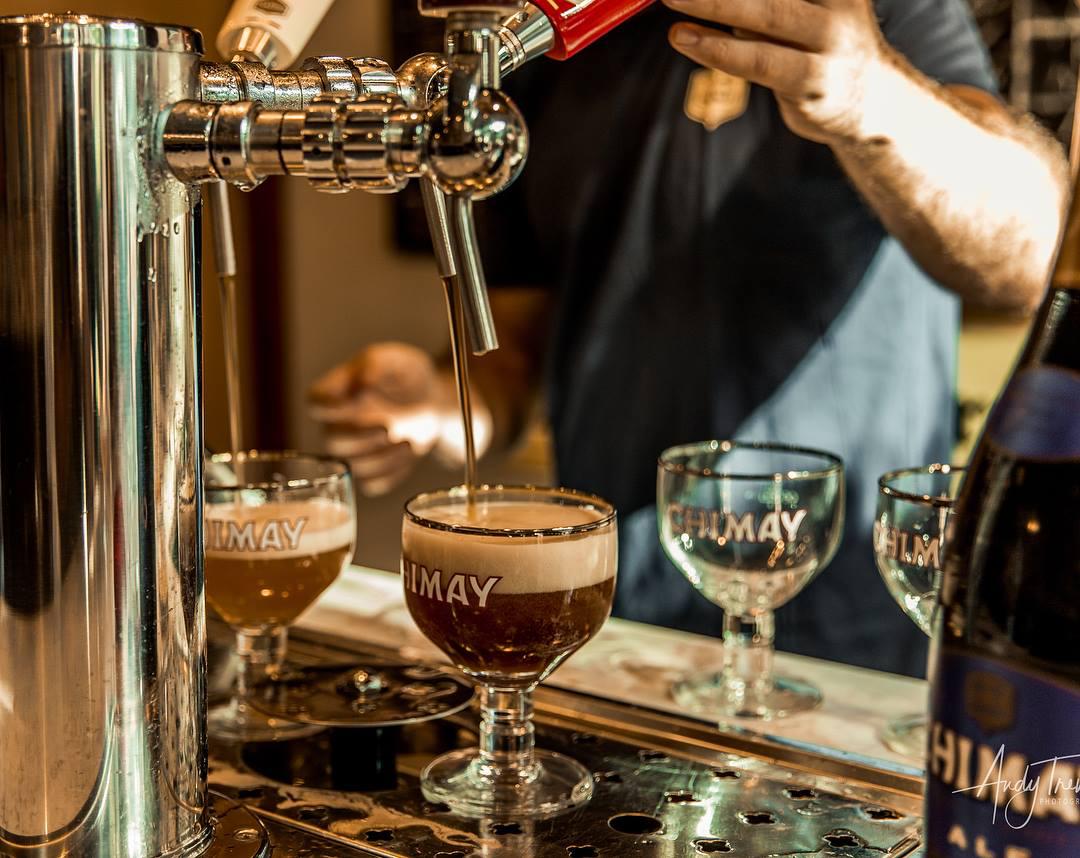
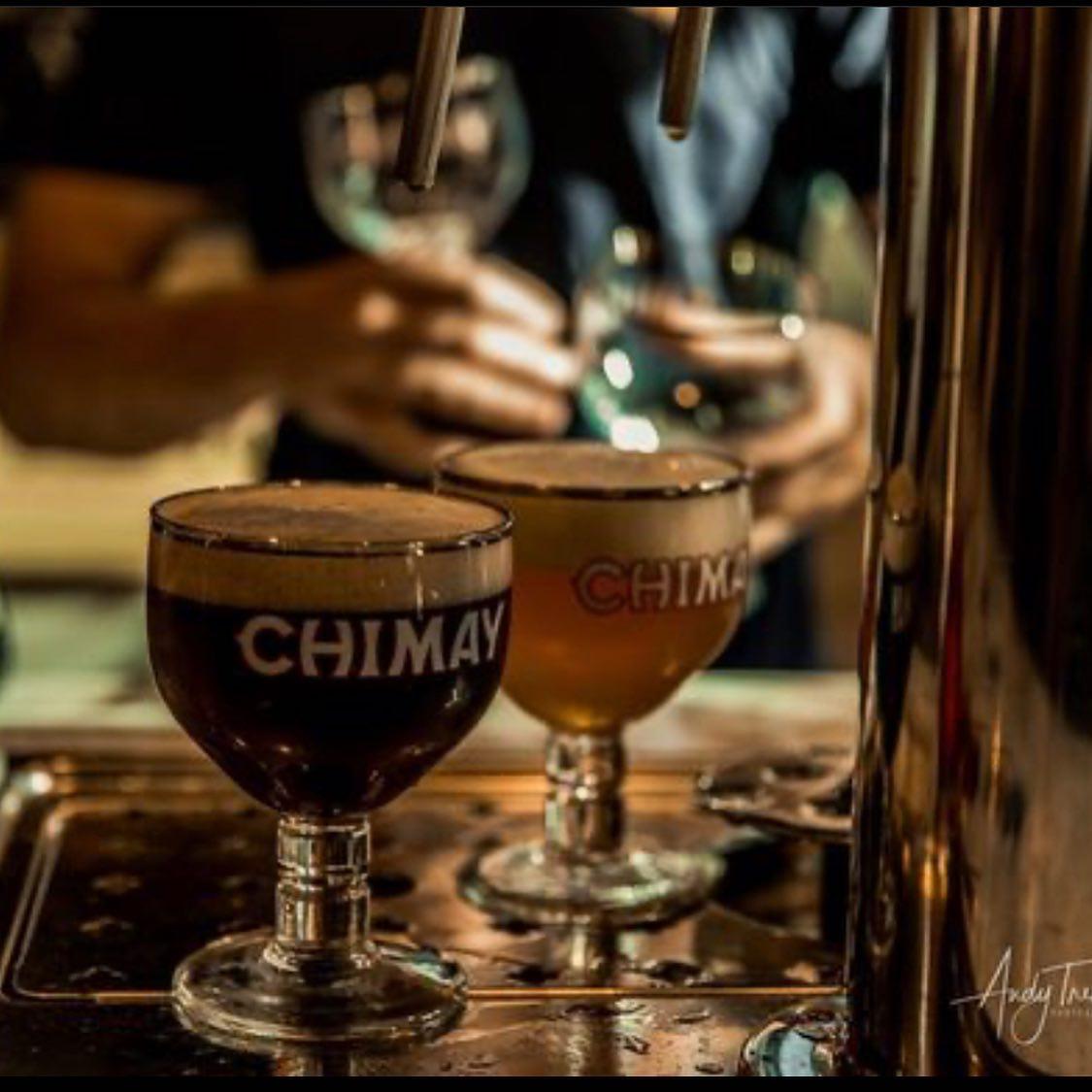
Chimay poured into its proper glass at Mort Subite Austin
These importers didn't just sell beer. They sold a philosophy. As Nancy Palma, the general manager of Mort Subite Austin, put it: "They introduced America's palates to a greater diversity of flavors. I think craft beer wouldn't be what it is today without them importing all these beers from Belgium."
Gambrinus ran for over a decade on Congress Avenue. It closed eventually, as bars do. But the seed had been planted.
IV. Pierre Celis and the Belgian-Austin Pipeline
If Gambrinus planted the seed, Pierre Celis watered it with a fire hose.
Celis was born in 1925 in Hoegaarden, a small Belgian town with a centuries-old tradition of brewing witbier, a cloudy, spiced wheat beer flavored with coriander and bitter orange peel. As a young man, he worked as a milkman and helped out at the local Tomsin brewery. When the last witbier brewery in Hoegaarden closed in 1957, an entire style of beer, brewed continuously for over 400 years, simply ceased to exist.
Celis couldn't let it go. In 1966, he started brewing witbier in his barn. The beer caught on. Then, in 1985, a fire destroyed the brewery. Underinsured and desperate, Celis sold to a larger corporation.
So in 1991, at the age of 66, Pierre Celis left Belgium for Austin, Texas.
He founded Celis Brewery in 1992 and introduced authentic Belgian witbier to Texans who'd been raised on Lone Star and Bud Light. Celis White (hazy, citrusy, nothing like anything on the market) became a sensation. It proved that Americans would drink Belgian-style beer if someone was brave enough to make it.
Pierre Celis passed away in 2011. But the pipeline he helped build between Belgium and Austin remains open. And it runs directly through Congress Avenue.
V. Mort Subite Austin: Sudden Death Returns
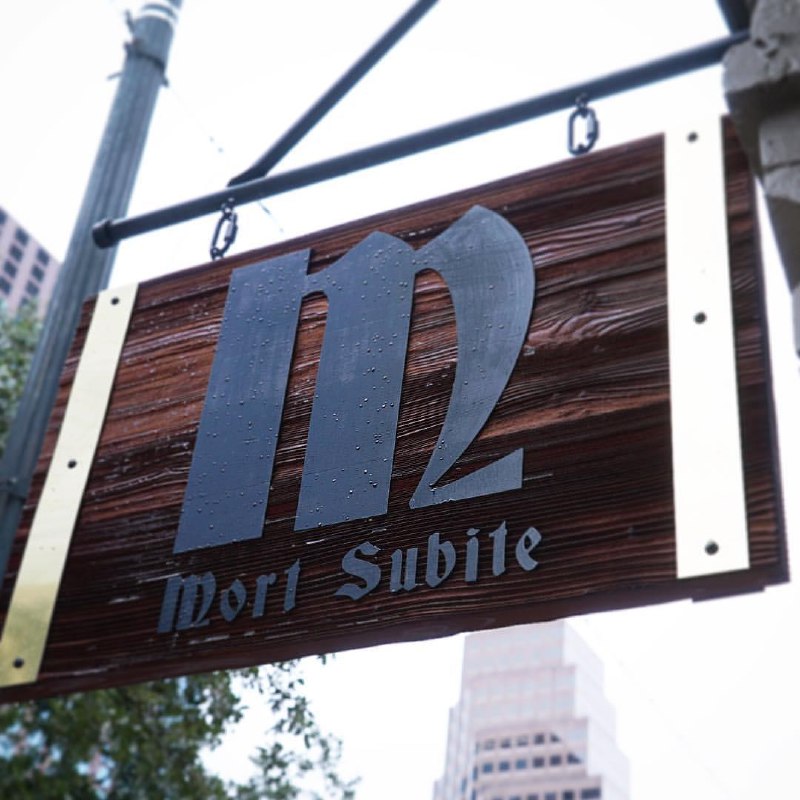
Mort Subite on Congress Avenue, Austin
In 2016, Jim Houchins, a longtime figure in Austin's Belgian beer import world, asked his friend James to help him open a Belgian bar. The idea had been floating around the community for years: Austin needed a proper Belgian café again.
They found a space on Congress Avenue: remarkably, just two doors down from where Gambrinus had stood. The same landlord who'd collected rent from Bobo Van Mechelen decades earlier now handed them a lease.
They gutted the space and rebuilt it in the image of Belgium's most revered pubs: a 40-foot mahogany bench along one wall, exposed brick on the other, Euro-style long-tipped faucets, and, hanging from the ceiling, rows of proper Belgian glassware in every shape the brewers intended.
Bobo Van Mechelen, the Gambrinus founder, gave them four Belgian provincial flags that had hung in the original bar. They now hang above the tables at Mort Subite Austin, a direct physical link between the two Congress Avenue bars separated by decades but united by the same mission.
VI. What It Means to Pour Properly
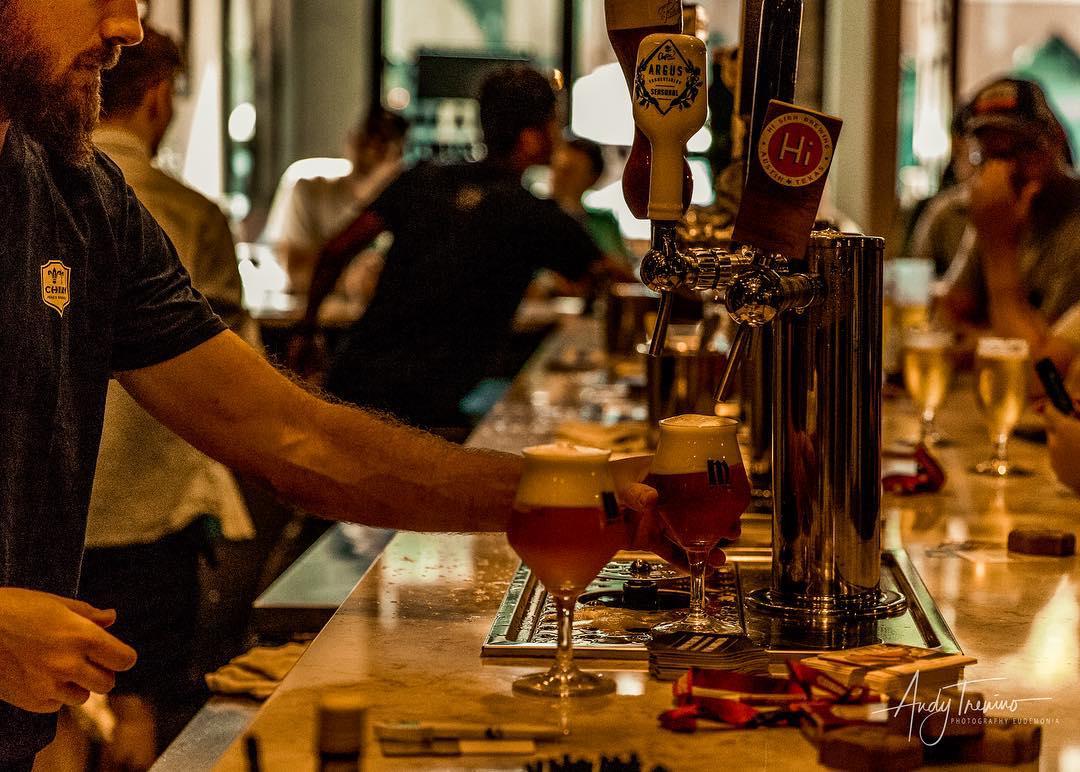
The Belgian pour: slow, deliberate, with a thick cap of foam
Walk into Mort Subite Austin and the first thing you notice is the glassware.
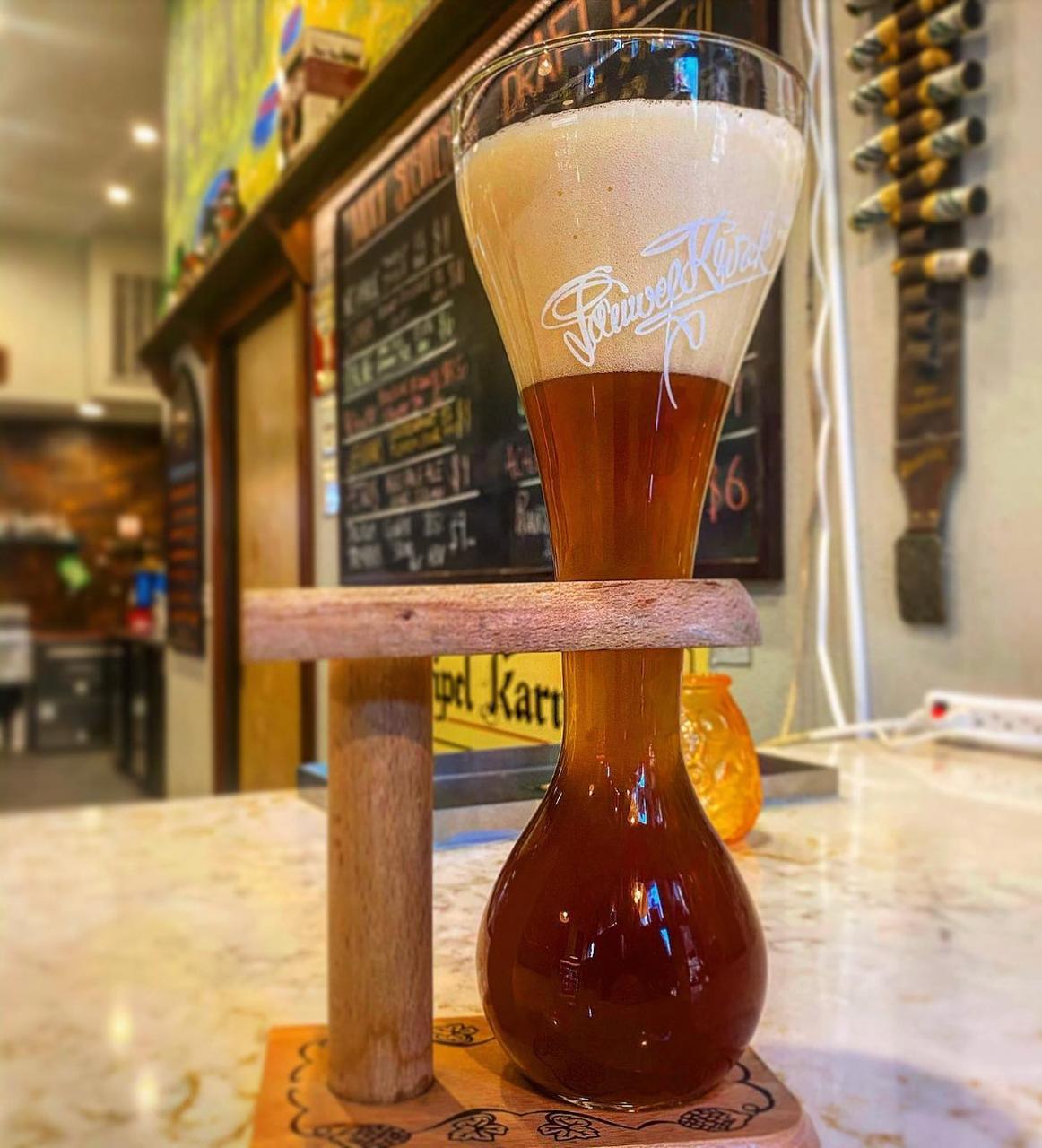
Above the white marble bar, sparkling upside down in neat rows, are dozens of glasses, and no two styles are the same. Wide-mouthed goblets for Chimay. Fluted tulips for Duvel. The absurd wooden-cradled bulb for Kwak. Tall, slender vases for witbier. Heavy chalices for quadrupels.
This isn't decoration. It's the whole point.
In Belgium, if a bar doesn't have the correct glass for the beer you ordered, the bartender will tell you to wait, or to order something else. The glass is not a container. It's part of the recipe. The shape controls the head retention, which preserves carbonation and aroma. The width of the mouth determines how much air hits the beer as you drink, which affects flavor release.
"You get a much fuller, richer experience in the authentic Belgian glasses. The beers get poured with a thick cap of foam, which enhances the whole sensory experience by preserving the aroma and the carbonation level and giving the beer a creamier mouthfeel."Nancy Palma, General Manager
There are 24 taps pouring Belgian and local craft beers. Behind them, a cellar stocked with over 40 bottles: rare Trappist ales, vintage lambics, limited-release abbey beers.
VII. Austhentico and the Back Courtyard
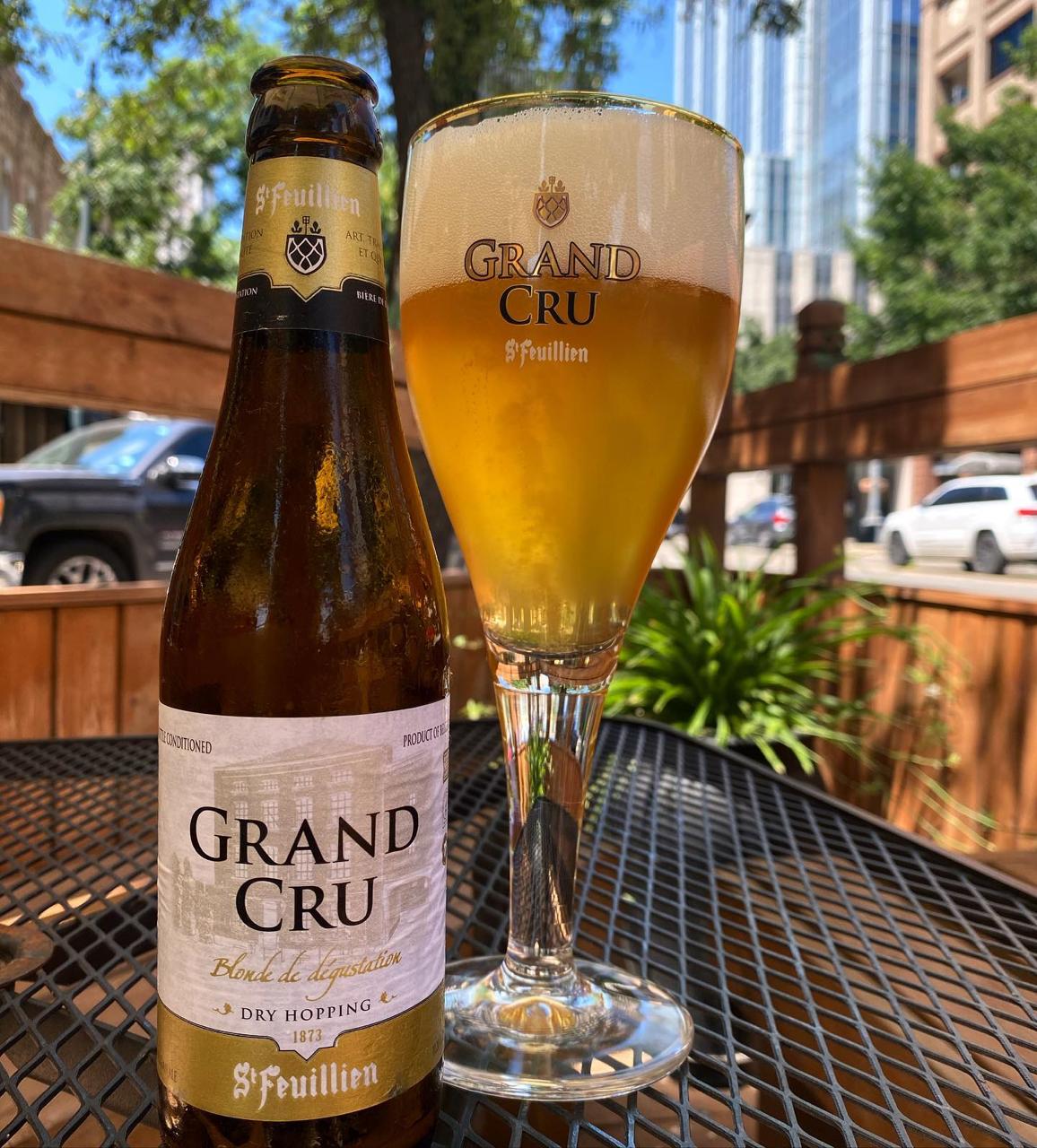
The courtyard at Mort Subite
Behind the main bar, past the interior dining room with its Belgian brewery plaques and Tintin murals, a doorway leads to a shaded back courtyard. This is where Austhentico lives, the Spanish food truck that has called Mort Subite home since June 2024.
Led by chefs Luis Felez (from Barcelona) and Sarai Salazar (from Mexico City), Austhentico brings the flavors of the Iberian Peninsula to a bar named for a Brussels café. It's the kind of combination that only works in Austin.
The menu is built around paella, cooked to order in traditional pans. There's fideuá, the Catalan noodle dish. Jamón Serrano sandwiches with Manchego cheese. And in a nod to the bar they call home, a "Taste of Belgium" section: Flemish frites and moules frites (mussels and fries).
The combination works because both cultures share the same relationship with food and drink: it's social, it's meant to be shared, and it's worth taking seriously without taking yourself too seriously.
VIII. A Legacy Joint
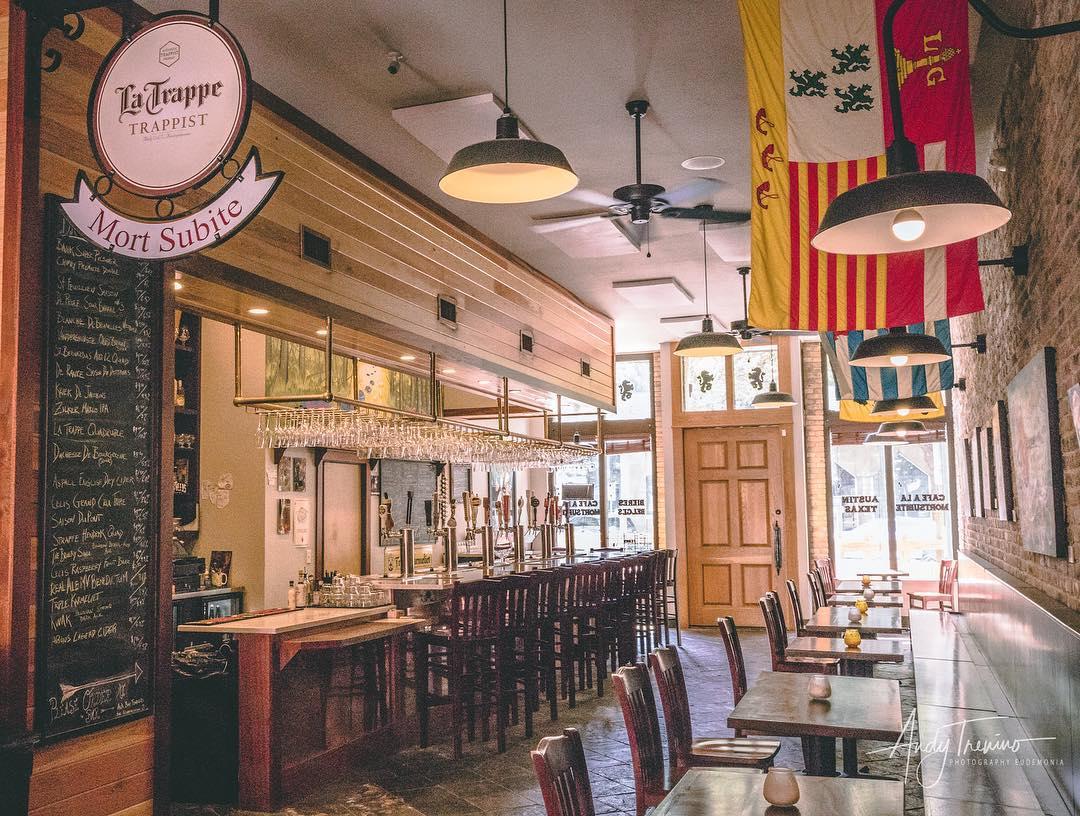
Inside Mort Subite Austin: mahogany bench, exposed brick, proper glassware
There's a stretch of Congress Avenue in downtown Austin, maybe a hundred yards, that contains more Belgian beer history than any other block in America.
Gambrinus stood here in 1979, pouring the first Duvel ever sold in the United States. Two doors down, Mort Subite opened in 2016, carrying four provincial flags from that original bar. A few miles south, Manneken-Brussel Imports has been bringing Chimay to every state in the union since 1978. And out on Metric Boulevard, Celis Brewery still pours witbier in the style of Hoegaarden.
Mort Subite Austin isn't just a bar. It's the living end of a thread that runs from medieval Trappist monasteries through the cafés of Brussels, through the rebellious importers of 1970s Austin, through Pierre Celis's barn in Hoegaarden, to a white marble bar on Congress Avenue where a bartender pours your Chimay into the right glass and sets it down in front of you with a thick cap of foam.
The dice game ended in Brussels a long time ago. But the name lives on: in a café run by the great-grandchildren of the man who made it famous, and in a bar in Austin, Texas, where the Belgian beer tradition isn't being reinvented or reimagined or disrupted.
It's just being preserved.
Mort subite. Sudden death.
Some things survive it.